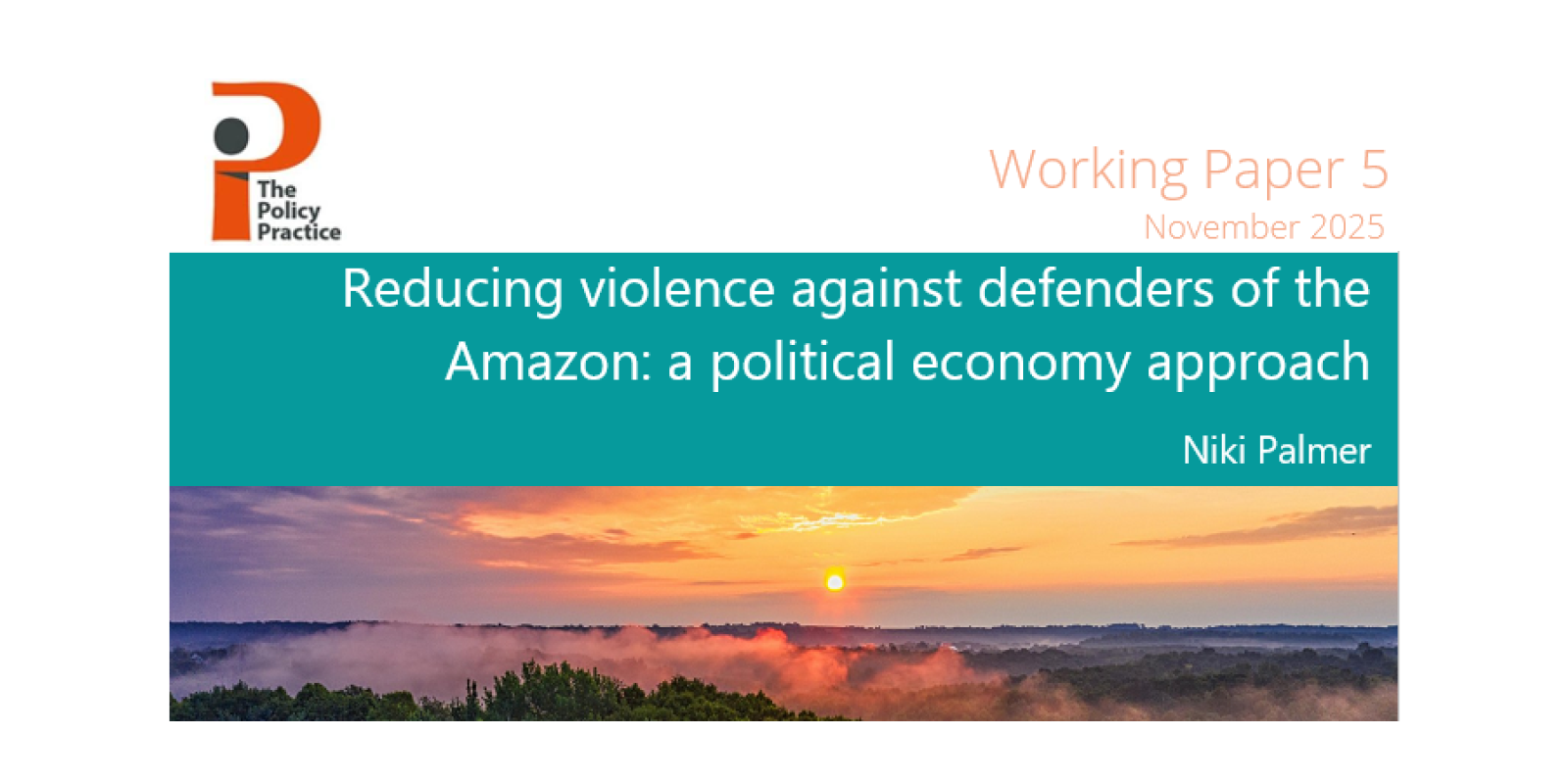
Working Paper 5: Reducing violence against defenders of the Amazon: a political economy approach
Written by TPP Principal Niki Palmer, this Working Paper examines why violence against environmental defenders in Brazil’s Amazon remains so widespread, despite laws meant to protect them. It shows that the issue is driven not only by political and economic interests in land and resource extraction, but also by competing ideas about what the Amazon represents.
For some, the Amazon is a vital global ecosystem; for others, a cultural homeland; and for many, a frontier of opportunity. These conflicting narratives shape behaviour, deepen polarisation and help explain why land-grabbing and violence often go unpunished.
The paper sets out three practical pathways that could shift incentives and improve protections:
- Strengthening the voice and influence of defenders
- Increasing the economic value placed on conservation, and
- Expanding international financing for forest protection.
It offers a clear, grounded analysis for readers looking to understand the dynamics driving violence in the Amazon and what might realistically change them.
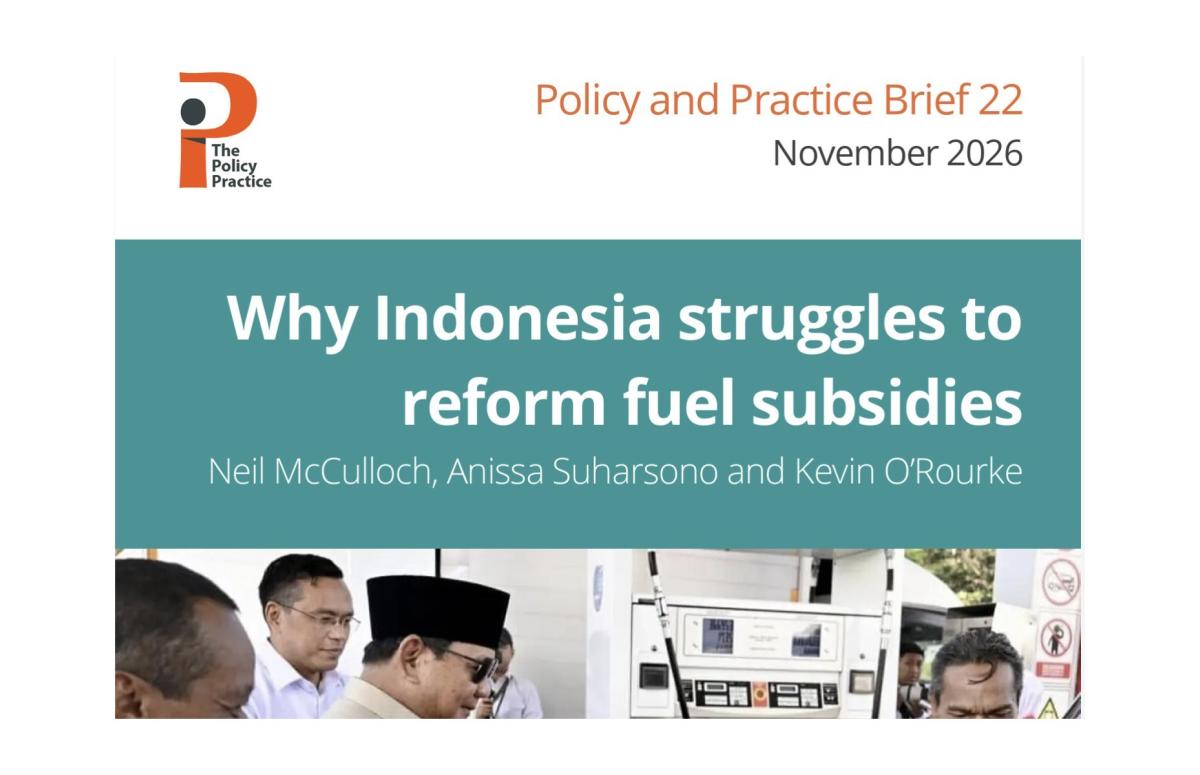
Policy and Practice Brief 22: Indonesian fuel subsidies
In our latest Policy and Practice Brief, TPP Director Neil McCulloch, Anissa Suharsono and Kevin O’Rourke explain why Indonesia still spends so much on fossil fuel subsidies and why reform is so hard. They show how reform could still happen, and what those who want change can do.
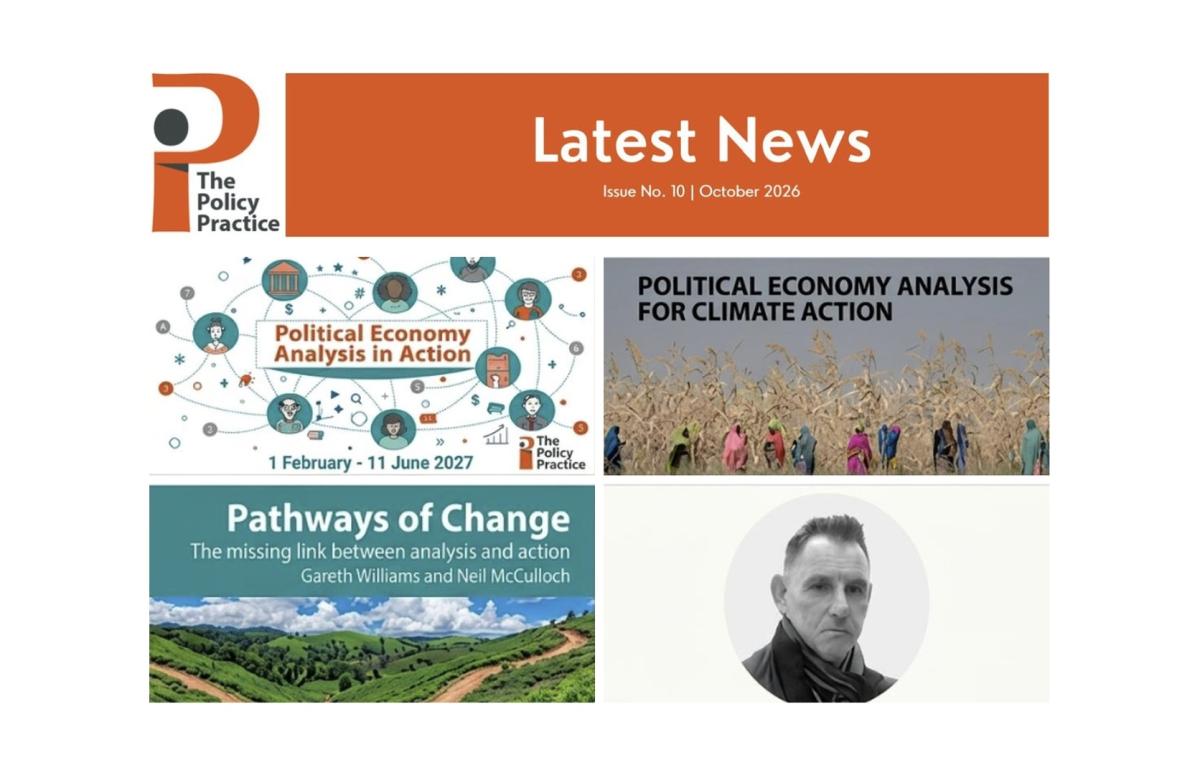
Latest Newsletter from TPP - October 2026
In our latest newsletter: a new Brief on pathways of change, our FCDO Sahel Technical Support Project, two PEA courses open for applications, an updated Online Library, and Steve Fraser appointed as our latest Principal.
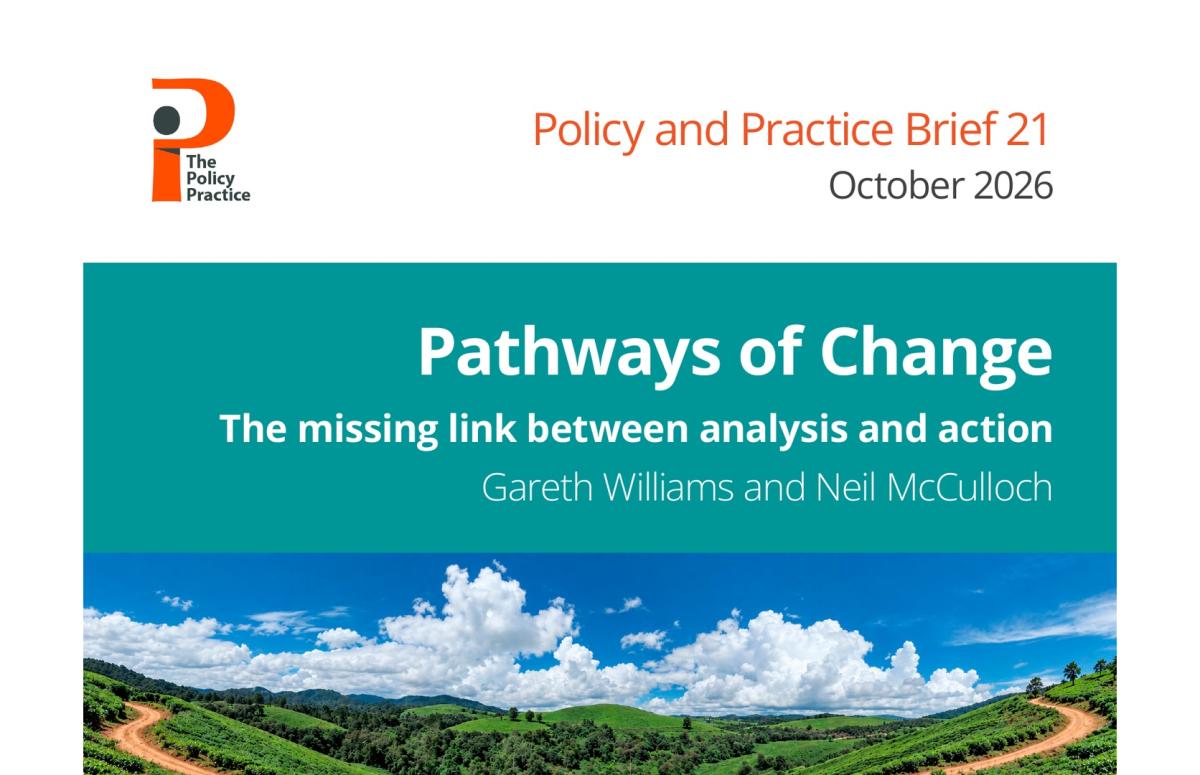
Policy and Practice Brief 21: Pathways of Change
Our new Policy and Practice Brief by TPP Directors Gareth Williams and Neil McCulloch sets out the Pathways of Change framework, a practical link between political economy analysis and action. Using examples from Ghana and Thailand, it shows how external partners can support change driven by domestic actors, based on a realistic analysis of how change might happen.