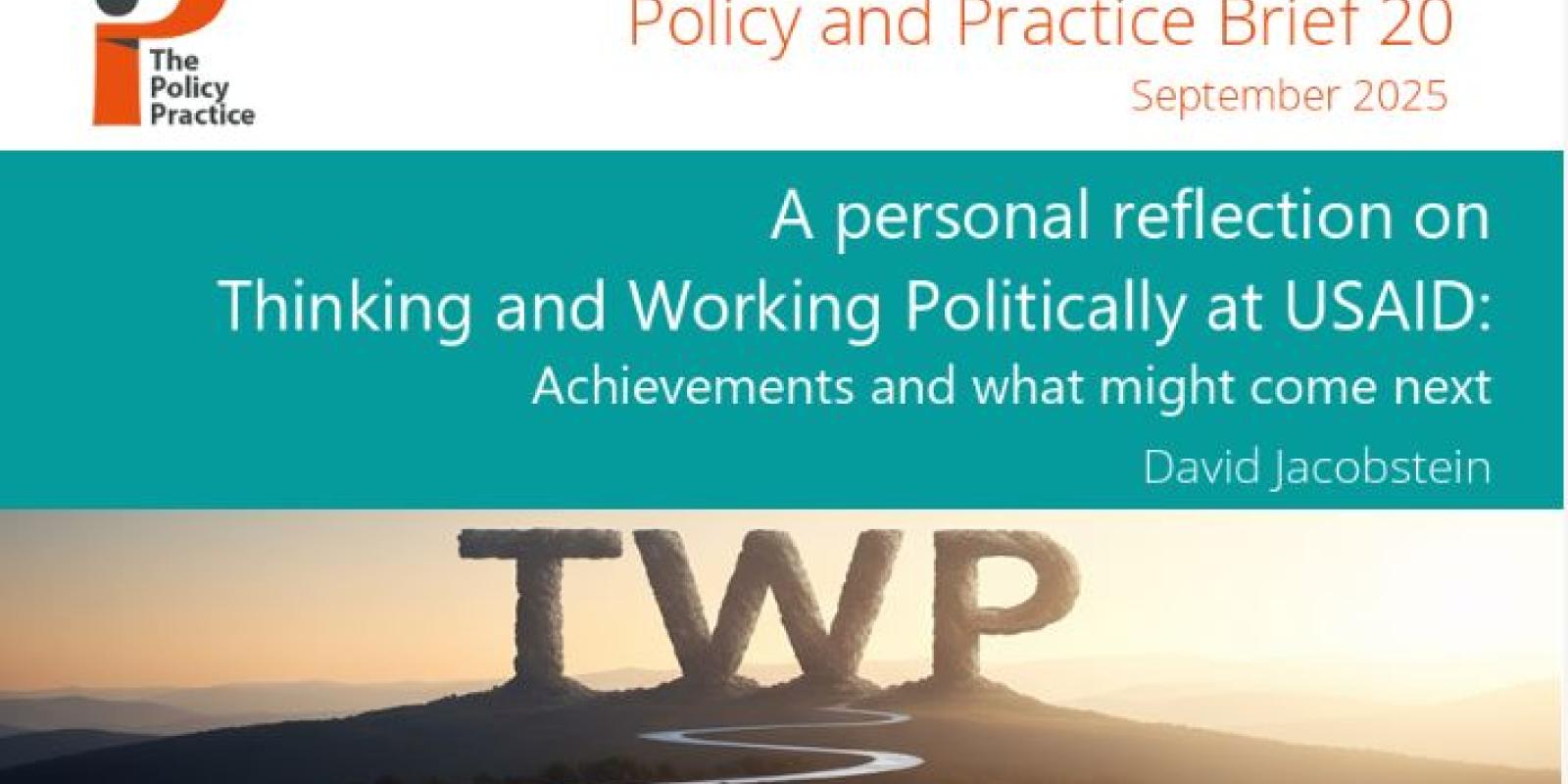
Policy and Practice Brief 20: Thinking and Working Politically at USAID
This paper shares an insider's perspective on the spread of Thinking and Working Politically (TWP) across the US Agency for International Development (USAID), highlighting lessons learned along the way that are relevant even beyond the dissolution of the Agency in 2025.
USAID’s experience illustrates both the opportunities and constraints of embedding political economy approaches within a large donor agency. It offers lessons for the wider development community about how to mainstream political insight, how to avoid diluting it into compliance, and how to link it to reform agendas such as localisation and systems thinking.
The main success factors that facilitated uptake of political economy analysis and TWP within USAID include:
1. Integration with existing frameworks
2. A bottom-up, peer-driven approach
3. Resonating with local knowledge
4. Connection to other reform areas
To overcome challenges in the continued adoption of PEA/TWP, the author proposes three main avenues for future work by TWP champions and allies:
1. Embrace complexity.
2. Move from a tactical to a strategic use of TWP.
3. Rethink accountability through partnership and probability.
You can find the USAID documents mentioned in this paper, and many more, in a USAID page of TPP's Online Library.
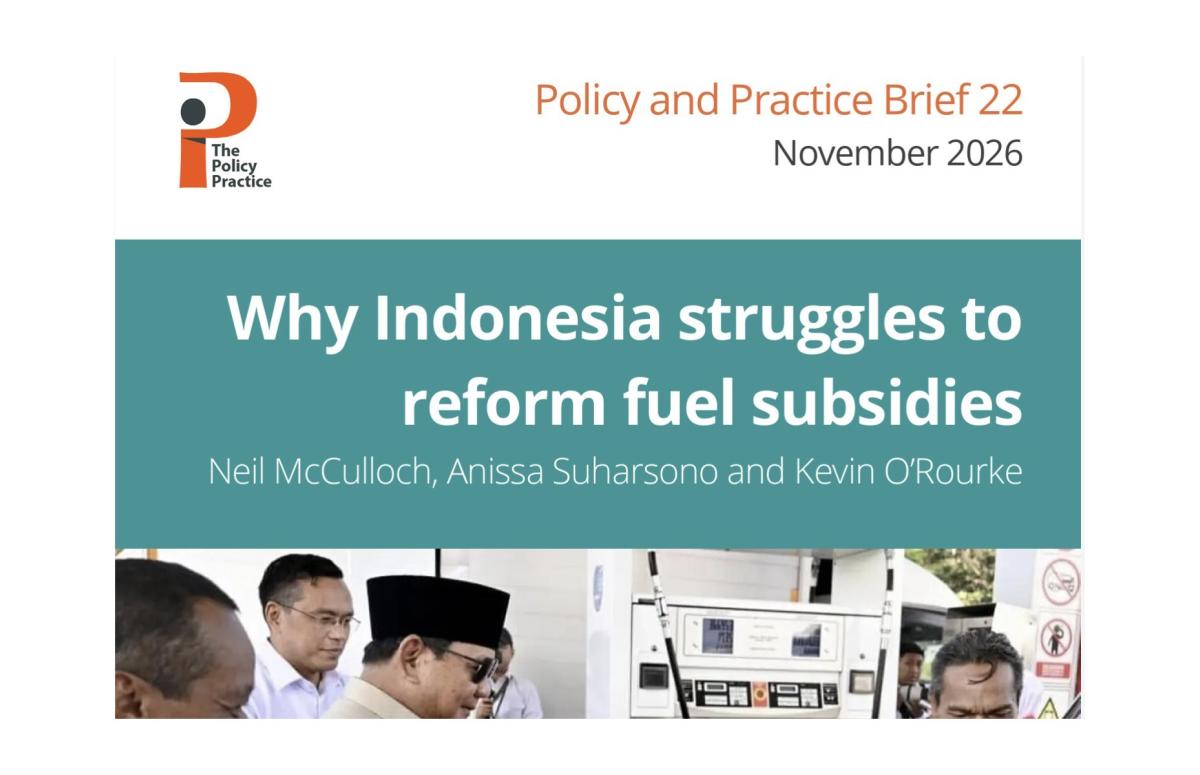
Policy and Practice Brief 22: Indonesian fuel subsidies
In our latest Policy and Practice Brief, TPP Director Neil McCulloch, Anissa Suharsono and Kevin O’Rourke explain why Indonesia still spends so much on fossil fuel subsidies and why reform is so hard. They show how reform could still happen, and what those who want change can do.
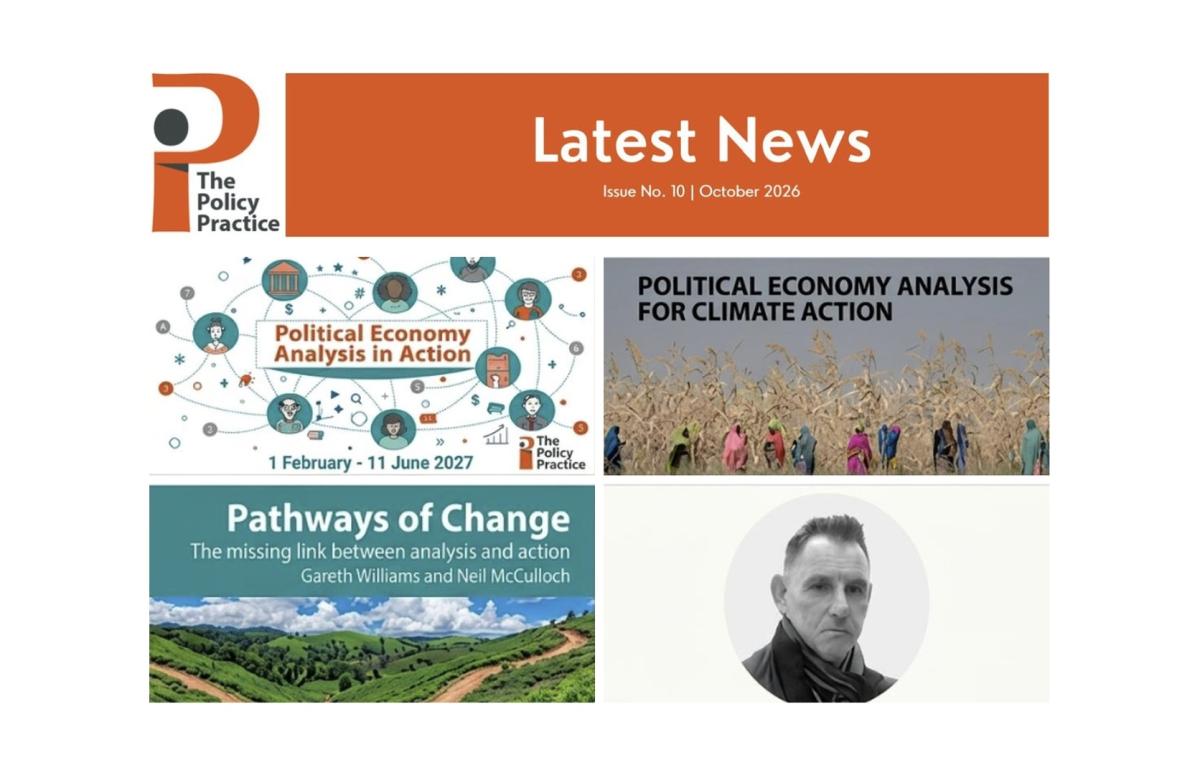
Latest Newsletter from TPP - October 2026
In our latest newsletter: a new Brief on pathways of change, our FCDO Sahel Technical Support Project, two PEA courses open for applications, an updated Online Library, and Steve Fraser appointed as our latest Principal.
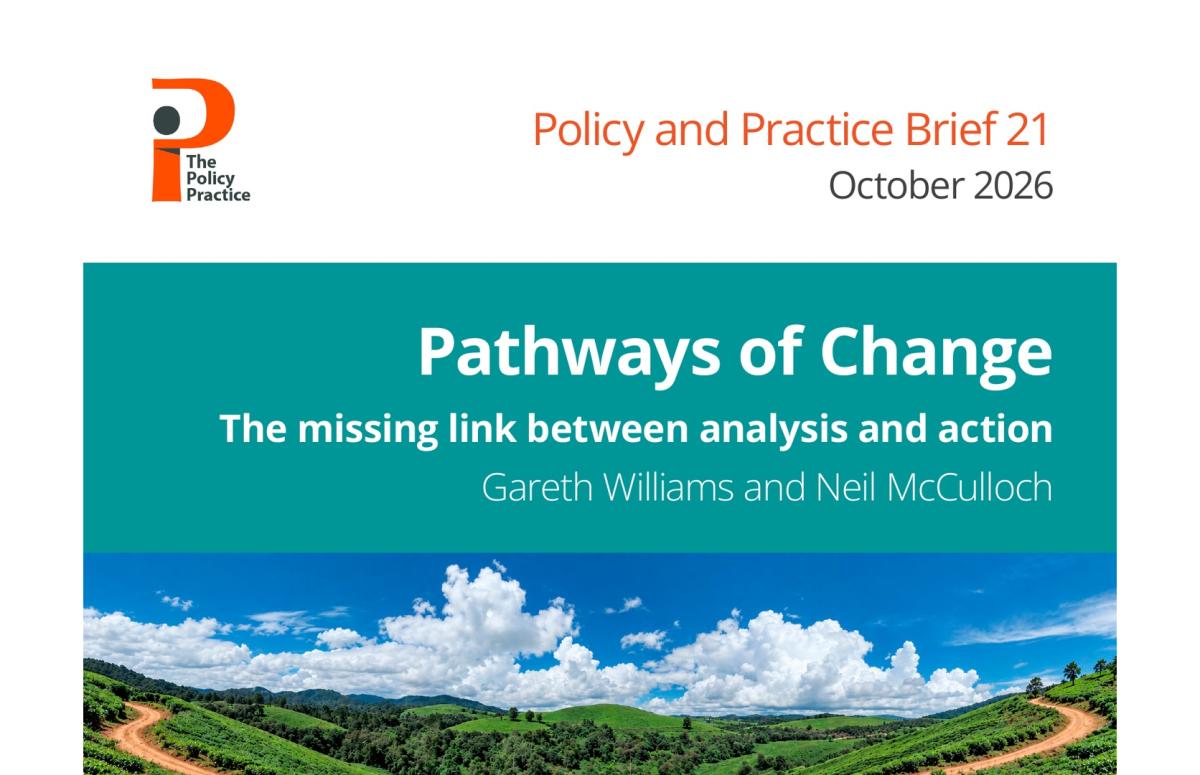
Policy and Practice Brief 21: Pathways of Change
Our new Policy and Practice Brief by TPP Directors Gareth Williams and Neil McCulloch sets out the Pathways of Change framework, a practical link between political economy analysis and action. Using examples from Ghana and Thailand, it shows how external partners can support change driven by domestic actors, based on a realistic analysis of how change might happen.