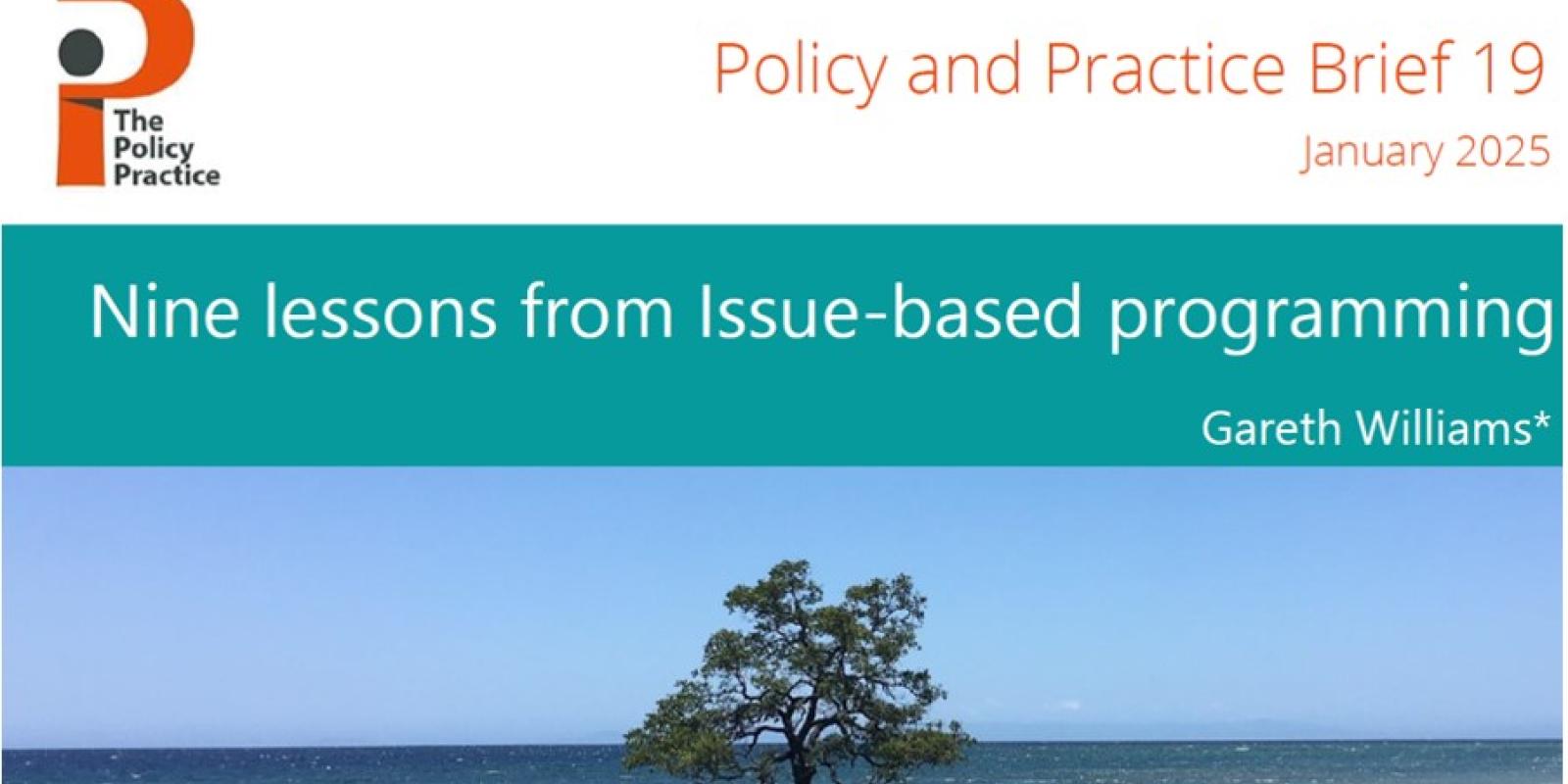
Policy and Practice Brief 19: Nine lessons from Issue-based programming
This Policy and Practice brief from TPP Director Gareth Williams discusses Issues-Based Programming (IBP), a development approach which mobilises stakeholders to drive change around locally defined issues. This paper examines its application in several countries through case studies of UK-funded projects and assesses IBP's effectiveness, highlighting successes and failures.
The nine success factors for IBP are:
- identifying tangible, tractable and feasible issues,
- clustering and building on issues,
- having a vision for transformational change,
- linking analysis to action,
- facilitating locally led and self-motivated stakeholder engagement
- mobilising the right combination of skills,
- ensuring effective programme leadership,
- using grants sparingly and strategically, and
- enabling flexible and adaptive programming.
Gareth argues that while IBP presents challenges, it has already demonstrated positive results including in difficult political contexts. The approach warrants further investment linked to experimentation, research and evaluation.
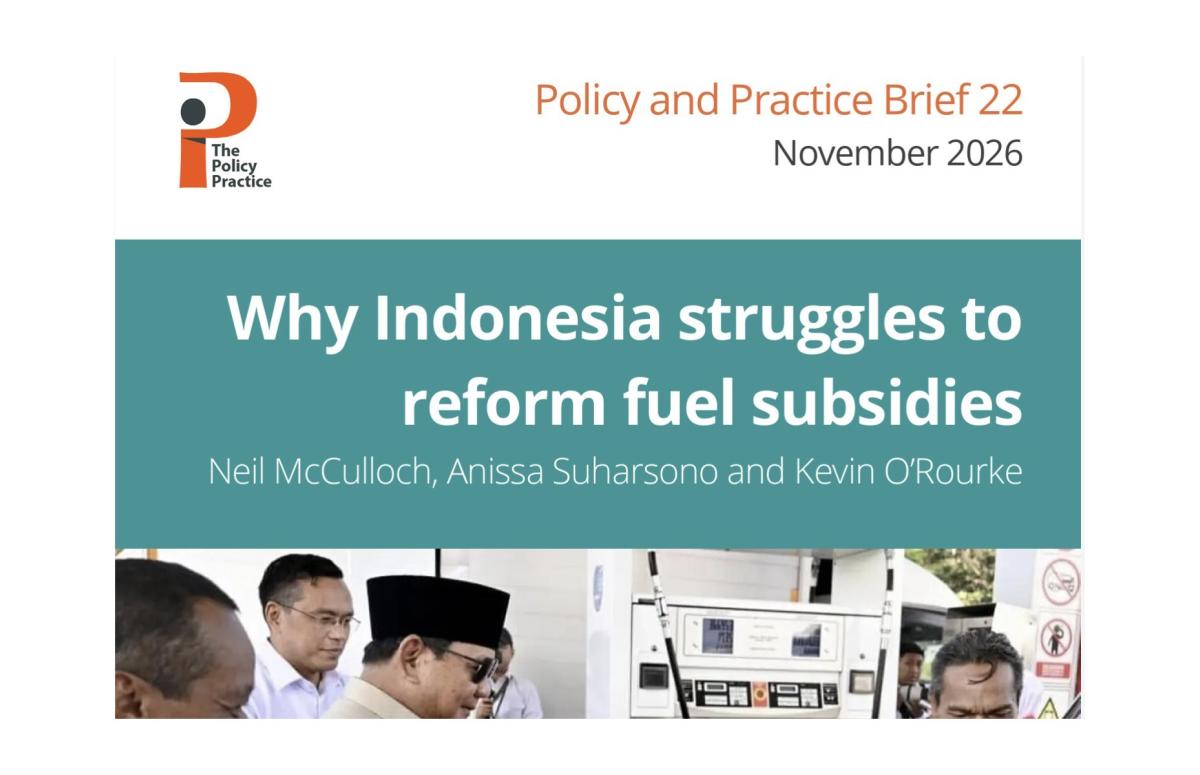
Policy and Practice Brief 22: Indonesian fuel subsidies
In our latest Policy and Practice Brief, TPP Director Neil McCulloch, Anissa Suharsono and Kevin O’Rourke explain why Indonesia still spends so much on fossil fuel subsidies and why reform is so hard. They show how reform could still happen, and what those who want change can do.
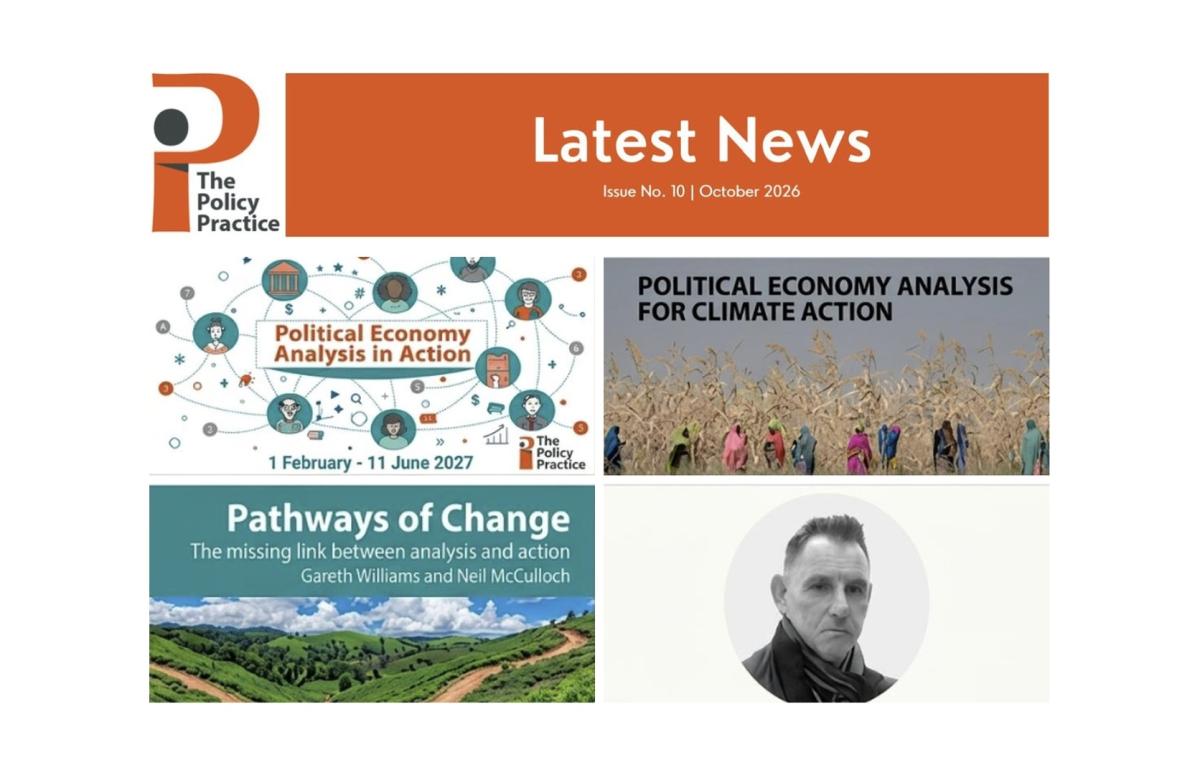
Latest Newsletter from TPP - October 2026
In our latest newsletter: a new Brief on pathways of change, our FCDO Sahel Technical Support Project, two PEA courses open for applications, an updated Online Library, and Steve Fraser appointed as our latest Principal.
Policy and Practice Brief 21: Pathways of Change
Our new Policy and Practice Brief by TPP Directors Gareth Williams and Neil McCulloch sets out the Pathways of Change framework, a practical link between political economy analysis and action. Using examples from Ghana and Thailand, it shows how external partners can support change driven by domestic actors, based on a realistic analysis of how change might happen.