A new narrative for climate action in a radically changed world - Part 2
In part 1 of his blog, Neil explained what is wrong with the current narrative on climate change. In Part 2, he sets out a new narrative.
Part 2: Climate policies as a vehicle to sustainable development
Although action to raise awareness about climate change has been going on for decades, public awareness of the issue really took off after the Paris Agreement in 2015. For at least a decade, climate change has had a prominent role in public debate in many countries. But, at least for citizens in many Western nations, this has also led to a growing sense of disillusionment. COPs are seen as giant talking shops, achieving little real change. Greta Thunberg’s famous ‘blah blah blah’ speech summed up the way that many regard the annual climate gatherings. This has led to a sense of exasperation among citizens that politicians are either incapable or unwilling to take the bold steps needed to solve the problem. At the same time, a combination of COVID, Russia’s invasion of Ukraine, and the associated economic shocks, have led some to some to believe that politicians should be focusing their efforts more on tackling issues at home, rather than grandstanding on the world stage.
The political response in most countries has been to backpedal action while keeping the rhetoric. While this actually fits with the conflicted views that people have – citizens want leaders to solve the problem, but with no short-term pain or disruption – it doesn’t attract support, because it is weak. Most people want to see action to tackle the climate crisis. They know that the nativists and climate deniers are leading the planet to ruin. They understand that the climate doesn’t care whether you believe the science or not, and that global heating will wreak chaos unless we change course.
This is where Gates has a point. We need a new narrative around climate change. The current narrative is “We are all doomed unless we take these very difficult actions immediately; and there is no realistic prospect of us doing so.” This is resulting in a widening three-way split between urgent appeals for more rapid action from climate activists, active denialism and obstruction from right-wing nativists, and the majority of politicians stuck in the middle, trying to do something that looks sufficient without upsetting too many voters with additional costs or disruption.
Now imagine there was no COP; no ambitious targets for Net Zero; no promise to marshal huge sums for climate finance – what would happen? The answer is not ‘nothing’. Politics, like nature, abhors a vacuum. Other priorities and visions would take over. What would they be? They would be visions, crafted by national leaders, that fit the aspirations and concerns of their people: the desire for jobs, lower inflation, cleaner air, better infrastructure, cheaper homes, affordable energy, etc. All of these things can be delivered by being green. But in such a world, leaders don’t need to be green for the sake of it; they don’t have to be green to save the planet; they are green because it delivers what people – voters – actually want.
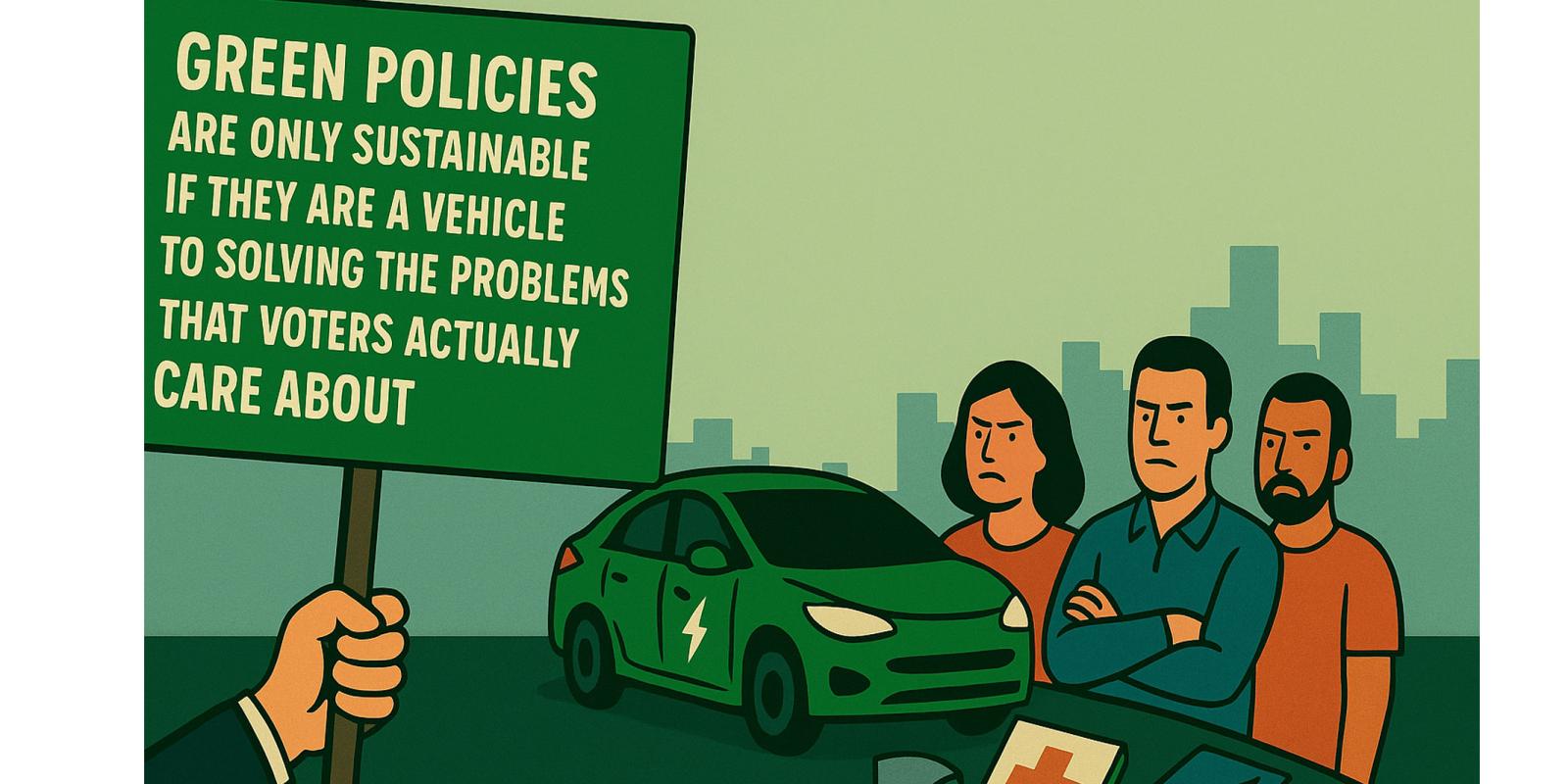
This narrative works. Witness the astonishing rise in the popularity of Zach Polanski, the new leader of the Green Party in the UK. He is popular not because he espouses green policies, but because he focuses on the issues that voters care about and argues that they are best solved with green policies. Green policies are only sustainable if they are a vehicle to solving the problems that voters actually care about, which may not be directly related to environmental problems. And what do voters really care about worldwide? They want better schools, health care, jobs, infrastructure, more equality, less corruption – in other words, they want development (rich country citizens don’t tend to call it this, but it is the same thing).
Bill Gates argues that dwindling international aid should focus on development objectives. That may be true, but it misses the bigger picture. All public finance should focus on development, as defined by the citizens of each country through their own political systems.
But if the main focus of politicians, in all countries, should be the development of their own countries, then what should be done about climate change? Should efforts to address the crisis simply be abandoned? Far from it. Rather, government should embed climate action in all the things they are doing to promote development. If citizens are concerned about housing, build houses – but ensure they are low-carbon homes; if voters want lower energy bills, invest in cheaper renewables to lower bills; if communities are angry about flooding, invest in nature-based solutions. Governments need to show citizens that action on climate change saves people money and improves their lives. Fortunately, it does.
But where does this argument leave international climate action? The final part of the blog is here.
Policy and Practice Brief 21: Pathways of Change
Our new Policy and Practice Brief by TPP Directors Gareth Williams and Neil McCulloch sets out the Pathways of Change framework, a practical link between political economy analysis and action. Using examples from Ghana and Thailand, it shows how external partners can support change driven by domestic actors, based on a realistic analysis of how change might happen.
Can we still achieve peace?
On the day US troops formally withdrew from Iraq, TPP Principal Niki Palmer asks if we can still achieve peace and suggests how to improve peacebuilding interventions.
Podcast: Subsidies and Social Protection - Reforms for a Sustainable Transition
Why are subsidies so difficult to reform, even when more effective alternatives exist? In this podcast by Socialprotection.org, TPP Director Neil McCulloch examines the political, institutional and economic challenges that have made subsidy reform one of the most complex issues in social policy.