
LEAP webinar series on lessons from 20 years of UK governance programming in Nigeria
Since 2019, LEAP, led by ODI, has undertaken research on Partnership to Engage, Research and Learn (PERL) and predecessor UK Government-funded programmes to strengthen the evidence base for governance reform in Nigeria. As part of end of programme activities, ODI in association with TPP are organising a series of public events to share lessons from 20 years of UK governance programmes in Nigeria.
The events will showcase findings and lessons from research on the impact of PERL and predecessor programmes on core governance reforms and service delivery improvements, as well as ways of working, looking in particular at 20 years of UK investment in four Northern states in Nigeria. There will be three webinars:
- 5th October - How does governance reform happen? Lessons from Nigeria
- 12th October - Working politically in practice: lessons from Nigeria
- 19th October - Does better governance lead to improved health and education? Lessons from Nigeria
To attend the webinars please visit the event pages and click on the “register now” button.
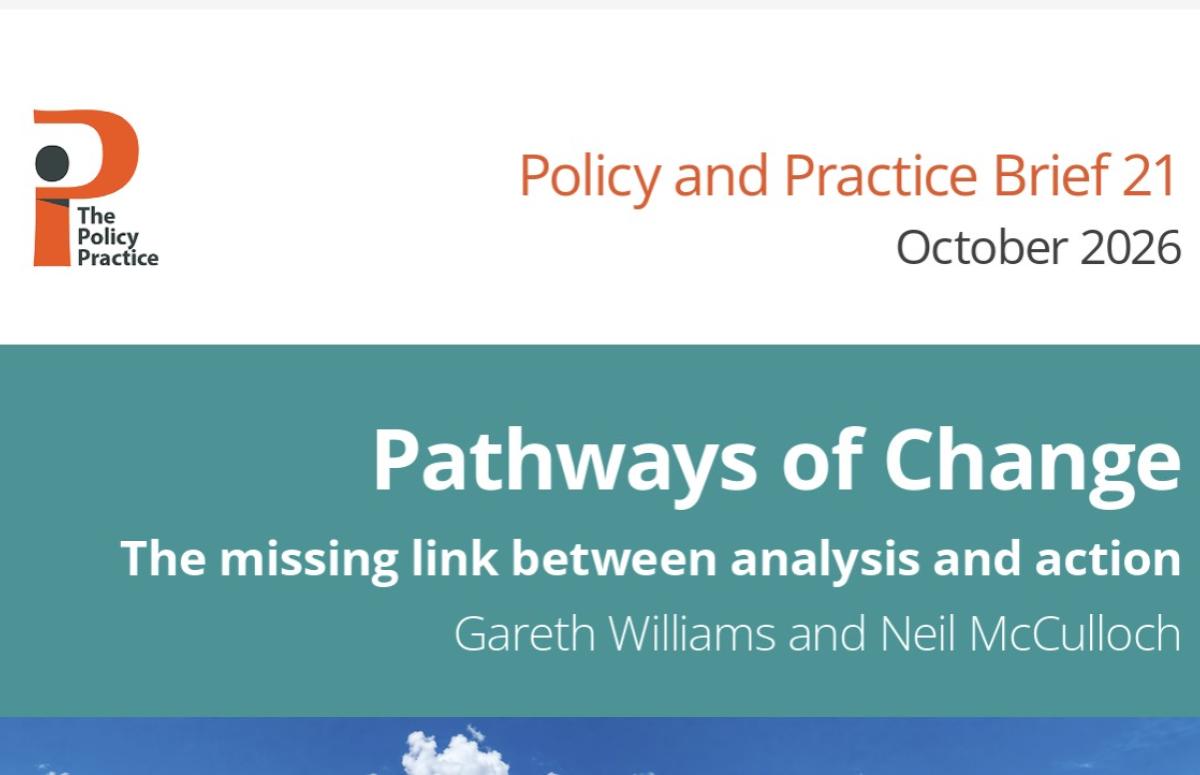
Policy and Practice Brief 21: Pathways of Change
Our new Policy and Practice Brief by TPP Directors Gareth Williams and Neil McCulloch sets out the Pathways of Change framework, a practical link between political economy analysis and action. Using examples from Ghana and Thailand, it shows how external partners can support change driven by domestic actors, based on a realistic analysis of how change might happen.

Can we still achieve peace?
On the day US troops formally withdrew from Iraq, TPP Principal Niki Palmer asks if we can still achieve peace and suggests how to improve peacebuilding interventions.

Podcast: Subsidies and Social Protection - Reforms for a Sustainable Transition
Why are subsidies so difficult to reform, even when more effective alternatives exist? In this podcast by Socialprotection.org, TPP Director Neil McCulloch examines the political, institutional and economic challenges that have made subsidy reform one of the most complex issues in social policy.